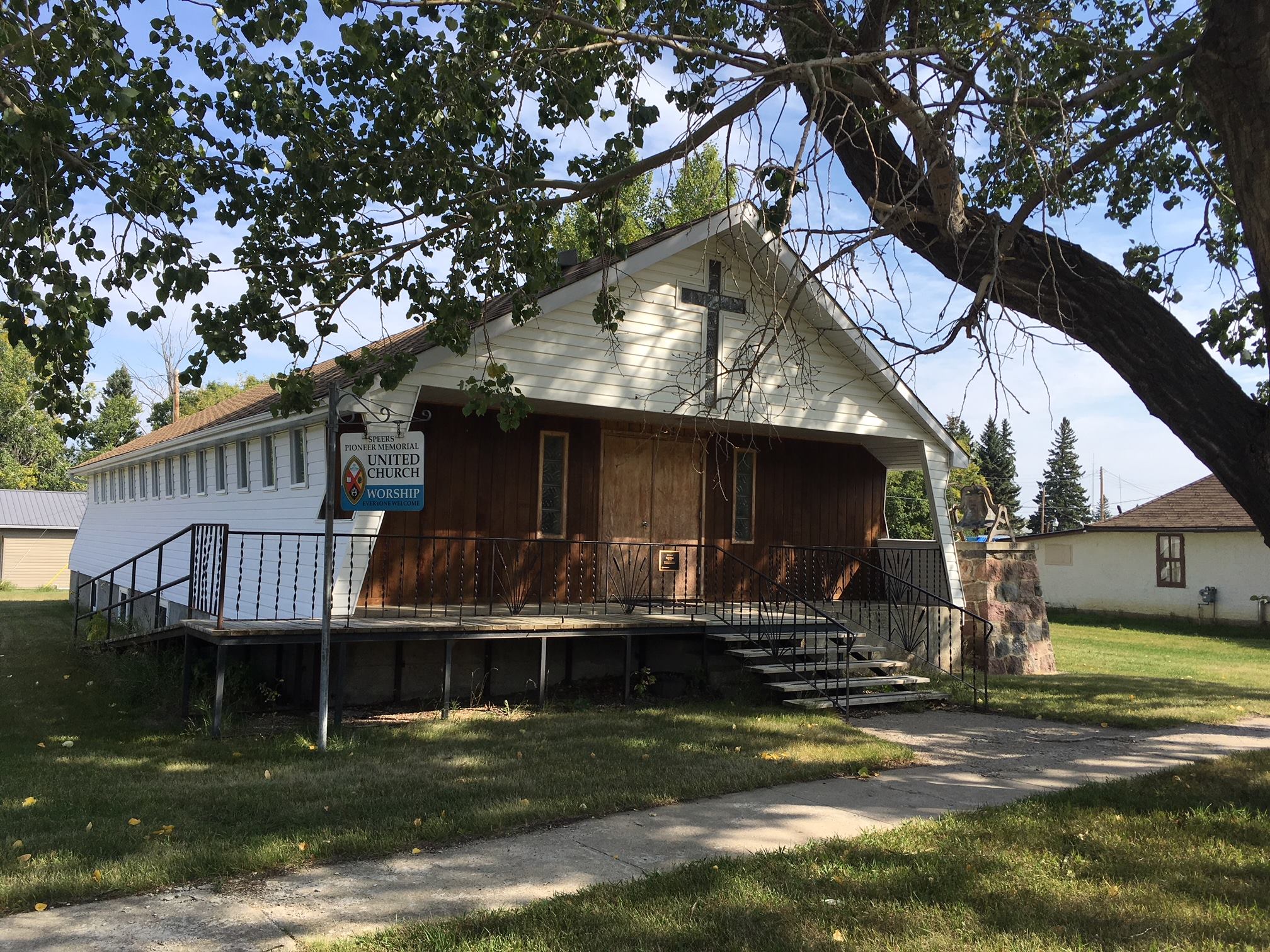
The story of our church is woven into the wider history of prairie settlement, shared worship, and the long memory of families who made Speers their home.
The history of Speers Pioneer Memorial United Church can be understood within the larger movement of settlement across central and western Saskatchewan in the early twentieth century. New communities often formed around grain elevators, schools, municipal halls, and churches. Long before modern roads and communication made travel easy, worship was one of the most dependable ways neighbours gathered, supported each other, and marked the milestones of family life.
As farming communities took shape, church life in the prairie provinces was often practical as much as devotional. Early services might be held in shared halls, schoolrooms, or private homes before a dedicated church building existed. People brought hymns, Bibles, traditions, and strong habits of volunteer labour. They also brought a conviction that the church should stand close to ordinary life, offering meaning during drought, hard winters, uncertain markets, and the daily labour of building community.
When The United Church of Canada was formed in 1925, many prairie congregations entered a new chapter of cooperation and identity. In places like Speers, that spirit of union supported continuity: worship remained local and personal, but the congregation also became part of a larger national witness. Over time, the church came to reflect both that broader United Church tradition and the particular character of the people who sustained it here.
The phrase "Pioneer Memorial" suggests more than age. It speaks to remembrance. Churches with this kind of naming often stand as visible acknowledgements of those who first cleared land, built institutions, and shaped the moral and social life of a district. In our case, the name honours earlier generations whose dedication made a continuing congregation possible. Their legacy is present not only in memory, but in the values of steadiness, hospitality, and service that still define the church.
The memorial aspect of our name reflects gratitude for those who came before us. It reminds the congregation that history is not decorative; it is formative. We inherit a church shaped by sacrifice, volunteer labour, and a belief that faith should remain visible in village life.
.jpg)
Across generations, the church has remained a place for worship, funerals, weddings, thanksgiving services, suppers, and the quiet continuity that anchors rural communities.
As the surrounding district developed, Christian worship was organized in homes, schools, and shared spaces. These early gatherings laid the social and spiritual foundation for a permanent congregation in the Speers area.
The union that created The United Church of Canada shaped many prairie congregations, including those in rural Saskatchewan, by strengthening common identity and shared mission.
Worship, women's fellowship, youth activities, seasonal celebrations, memorial services, and community meals gave the congregation a central role in the life of the village and district.
The congregation continued to honour pioneer families and the memorial purpose of the church name, carrying forward records, stories, and local traditions.
Speers Pioneer Memorial United Church remains active as a welcoming community of worship, service, and remembrance for present and future generations.
.jpg)
.jpg)